Friday, August 31, 2012

Thoughts for the final Friday in August

"Crucifixion," Giotto

The following is taken from Tractate 118 of St. Augustine of Hippo (feast Aug. 28):


For what could we have to say of the cross itself, which every one knows was in like manner made and fastened to Christ by enemies and sinners? And yet it is to it we may rightly understand the words of the apostle to be applicable, "what is the breadth, and the length, and the height, and the depth." Ephesians 3:18 For its breadth lies in the transverse beam, on which the hands of the Crucified are extended; and signifies good works in all the breadth of love: its length extends from the transverse beam to the ground, and is that whereto the back and feet are affixed; and signifies perseverance through the whole length of time to the end: its height is in the summit, which rises upwards above the transverse beam; and signifies the supernal goal, to which all works have reference, since all things that are done well and perseveringly, in respect of their breadth and length, are to be done also with due regard to the exalted character of the divine rewards: its depth is found in the part that is fixed into the ground; for there it is both concealed and invisible, and yet from thence spring up all those parts that are outstanding and evident to the senses; just as all that is good in us proceeds from the depths of the grace of God, which is beyond the reach of human comprehension and judgment.

St. Augustine of Hippo, pray for us.

Thursday, August 30, 2012

Know your vestments

What is this?

You probably think you know a lot about vestments, right?   Well, let's find out if you know as much as you think you do.  We'll start with a hard one.  What is that cloth on the bishop's lap called?

Well?

It's a gremiale.  According to Wikipedia, a gremiale is:

"a square or oblong cloth which a bishop, according to the "Cæremoniale Episcoporum" and "Pontificale", should wear over his lap, when seated on the throne during the singing of the Kyrie, Gloria and Credo by the choir, during the distribution of blessed candles, palms or ashes, during the washing of feet in the Mass of the Lord's Supper, and also during the anointments in connection with Holy orders.

The primary object of the gremiale is to prevent the soiling of the other pontifical vestments, especially the chasuble."

Those who answered correctly are entitled to an Inigo Hicks refrigerator magnet.   These handy devices don't exist yet, but if and when they do, those who answered correctly will certainly be entitled to one.

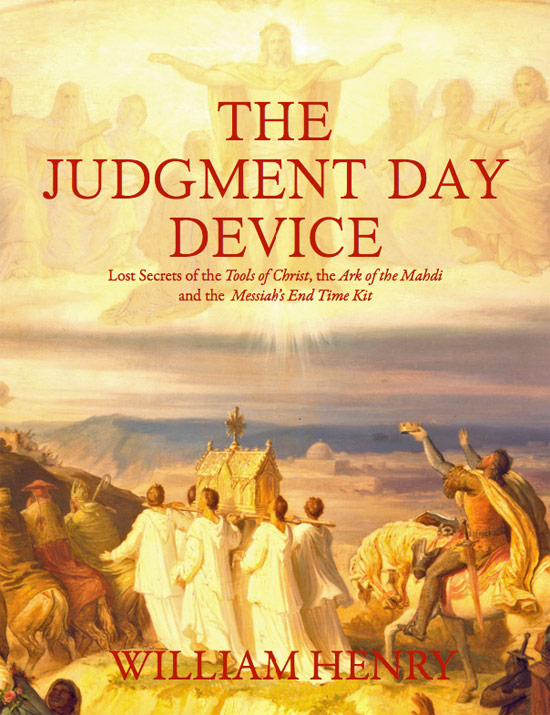
A Business Strategy for Judgment Day


Use it to sell books and dvds.  Also, try to get people to send you money. 

That's a guy named William Henry's angle, which is encouraging, in a way.  If William Henry really thinks the world is about to end, why does it look so much like a business opportunity to him?

Wednesday, August 29, 2012

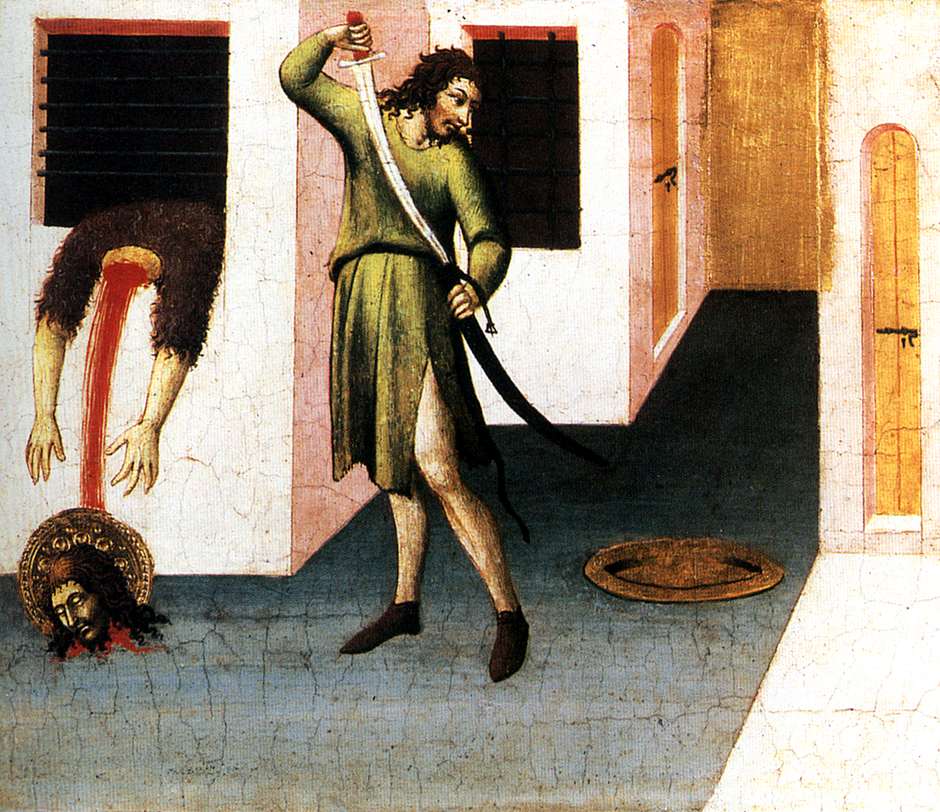
The Beheading of St. John the Baptist


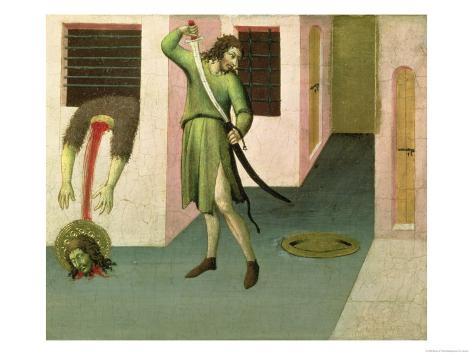
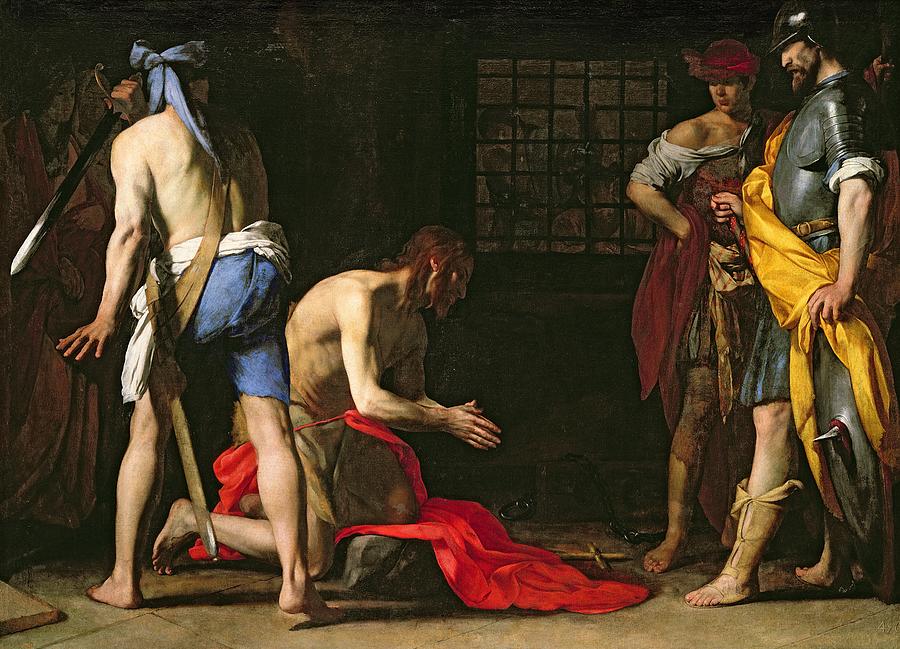
Today is the feast of the Beheading of St. John the Baptist, a rather tragic and melancholy subject for a feast.   Despite this, or maybe because of its inherent drama (and gore), the beheading of St. John has been a favorite subject of painters through the centuries, as you may see from the small sample below. 


"Beheading of St. John the Baptist," Peter Paul Rubens


"Beheading of St. John the Baptist," Caravaggio


                                      "Beheading of St. John the Baptist" Di Pietro Sano


"Beheading of St. John the Baptist" Massimo Stanzione


It also inspired a gory opera:


St. John the Baptist, pray for us.

Tuesday, August 28, 2012

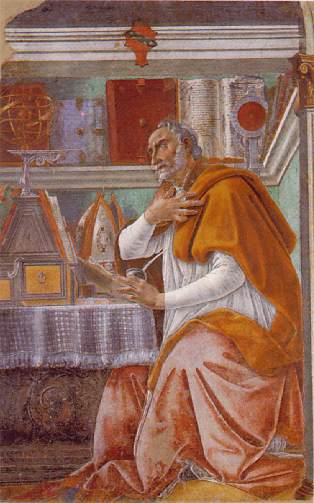
Hail, Augustine, Bishop and Doctor

"St. Augustine of Hippo," by Botticelli


Today we celebrate the feast of the great Bishop and Doctor of the Church, St. Augustine of Hippo (354 AD - 430 AD).   According to the Catholic Encyclopedia, "[t]he great St. Augustine's life is unfolded to us in documents of unrivaled richness, and of no great character of ancient times have we information comparable to that contained in the "Confessions", which relate the touching story of his soul, the "Retractations," which give the history of his mind, and the "Life of Augustine," written by his friend Possidius, telling of the saint's apostolate."   It is mostly due to his "Confessions," the first autobiography written in the West and a model for many later writers, that St. Augustine is so well known to moderns.  However, similarities in the atmosphere of our times and those of St. Augustine also form the basis for a sort of spiritual kinship with the great saint.  Like us, St. Augustine lived in the shadow of a great civilization's collapse.  Indeed, Augustine died as his episcopal see of Hippo Regius was under siege by Vandals, and defended by Goths, both of whom were heretical Arians.   Although he was greatly anguished by the suffering occasioned by the sack of Rome and similar disasters, in his great work "The City of God," St. Augustine consoled Christians with the thought that, even if the earthly rule of the Empire was imperiled, the City of God would ultimately triumph.   St. Augustine counseled Christians to keep their gaze fixed on Heaven, which became a standard Christian theme  throughout Late Antiquity.

The following excerpt from "The Confessions" is taken from the Office of Readings for the feast:

Urged to reflect upon myself, I entered under your guidance the innermost places of my being; but only because you had become my helper was I able to do so. I entered, then, and with the vision of my spirit, such as it was, I saw the incommutable light far above my spiritual ken and transcending my mind: not this common light which every carnal eye can see, nor any light of the same order; but greater, as though this common light were shining much more powerfully, far more brightly, and so extensively as to fill the universe. The light I saw was not the common light at all, but something different, utterly different, from all those things. Nor was it higher than my mind in the sense that oil floats on water or the sky is above the earth; it was exalted because this very light made me, and I was below it because by it I was made. Anyone who knows truth knows this light.

St. Augustine of Hippo, pray for us.

Monday, August 27, 2012

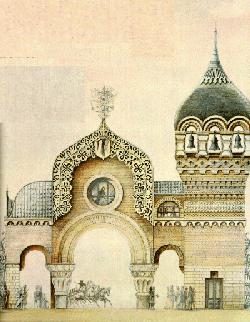
I'd expected the "Pictures" to be somewhat more magnificent

This inspired "The Great Gate at Kiev"?


Mussorgsky's "Pictures at an Exhibition" was inspired by ten drawings and watercolors done by a recently deceased friend named Victor Hartmann.   You may look over some of the surviving works here.   Strange that such great music was animated by such pedestrian artwork.

Saturday, August 25, 2012

If we humble ourselves before Muslims maybe they'll stop killing us

The Army's traditional method for dealing with enemy brutality has an admirable track record

This is the US Army's not very re-assuring strategy for dealing with a growing number of murders of US soldiers by the Afghan security forces they were training.

UPDATE:  It's not working.
UPDATE:  It's still not working, and so we gave up.  Chalk up one for the terrorists.