Showing posts with label Caravaggio. Show all posts

Friday, September 20, 2013

Pope Francis in discursive mode


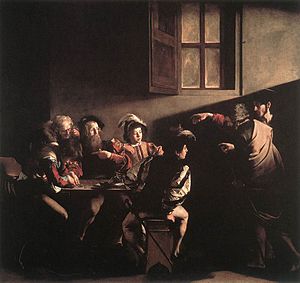
"The Calling of St. Matthew" by Caravaggio
a particularly meaningful painting for Pope Francis

Our pope seems a very interesting, reflective and holy man, judging from this transcript of an interview recently conducted by fellow Jesuit Anthony Spadaro.  It bears reading in its entirety.  I especially liked this part:

“I pray the breviary every morning. I like to pray with the psalms. Then, later, I celebrate Mass. I pray the Rosary. What I really prefer is adoration in the evening, even when I get distracted and think of other things, or even fall asleep praying. In the evening then, between seven and eight o’clock, I stay in front of the Blessed Sacrament for an hour in adoration. But I pray mentally even when I am waiting at the dentist or at other times of the day.

Prayer for me is always a prayer full of memory, of recollection, even the memory of my own history or what the Lord has done in his church or in a particular parish.... And I ask myself: ‘What have I done for Christ? What am I doing for Christ? What should I do for Christ?’ ... But above all, I also know that the Lord remembers me. I can forget about him, but I know that he never, ever forgets me. ... It is this memory that makes me his son and that makes me a father, too."

Wednesday, August 29, 2012

The Beheading of St. John the Baptist


Today is the feast of the Beheading of St. John the Baptist, a rather tragic and melancholy subject for a feast.   Despite this, or maybe because of its inherent drama (and gore), the beheading of St. John has been a favorite subject of painters through the centuries, as you may see from the small sample below. 


"Beheading of St. John the Baptist," Peter Paul Rubens


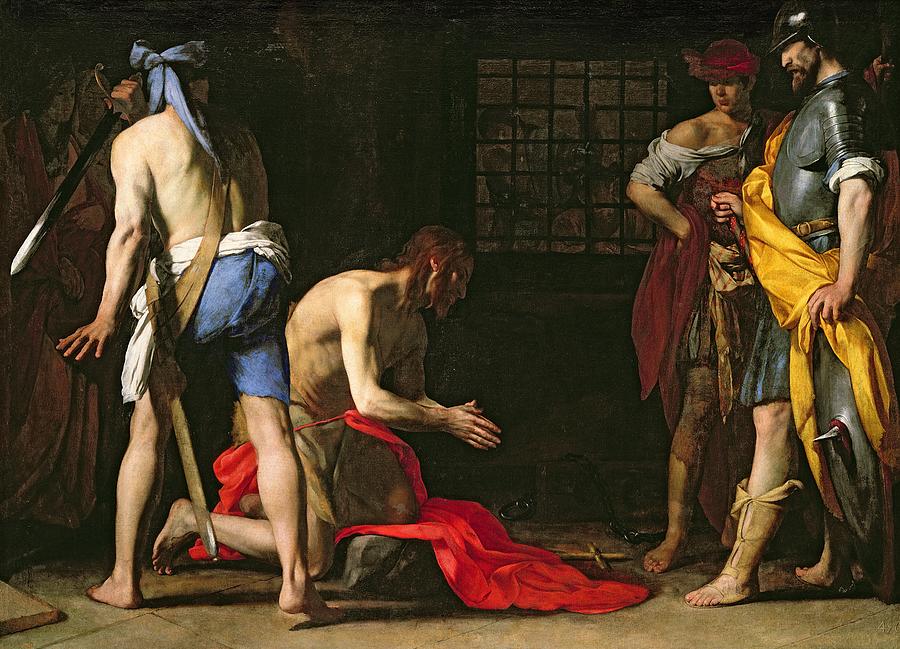
"Beheading of St. John the Baptist," Caravaggio


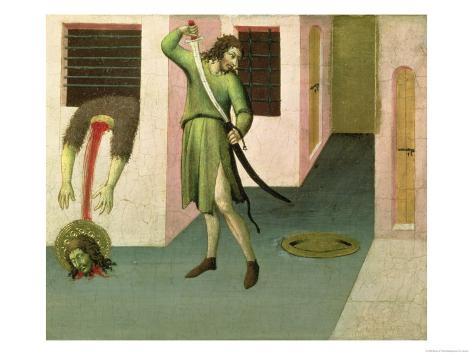
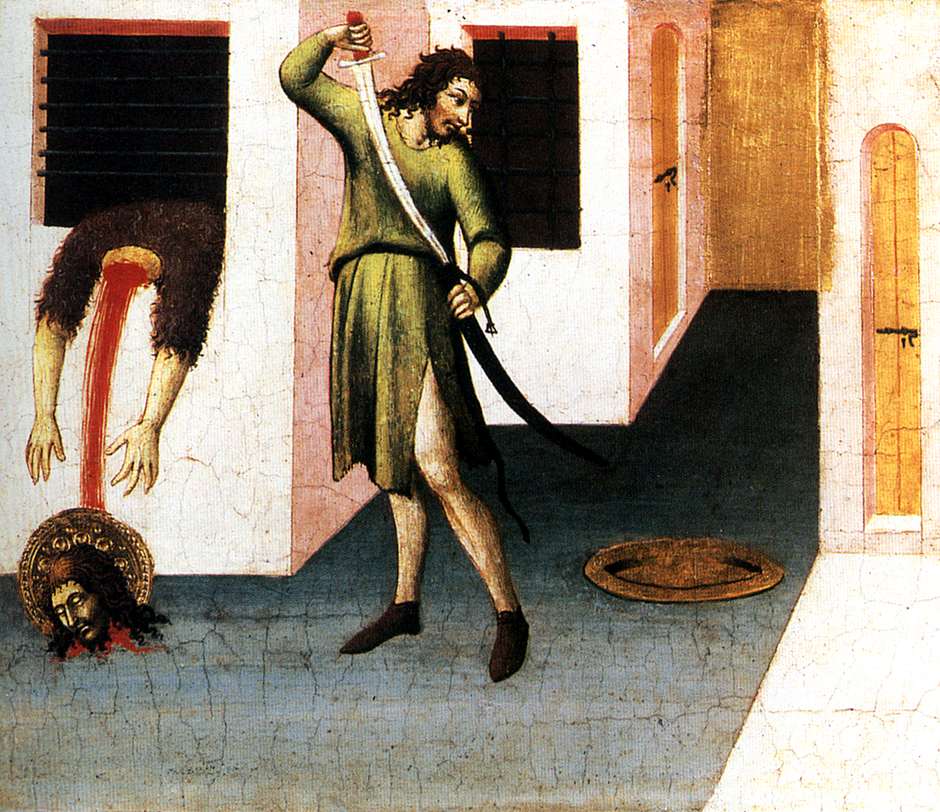
                                      "Beheading of St. John the Baptist" Di Pietro Sano


"Beheading of St. John the Baptist" Massimo Stanzione


It also inspired a gory opera:


St. John the Baptist, pray for us.

Friday, July 27, 2012

Which one is Matthew?

"The Calling of St. Matthew," Caravaggio


In Caravaggio's painting "The Vocation of Matthew" I'd always assumed Matthew was the bearded fellow pointing to himself.   Indeed, that's what visitors to the Church of  Saint Louis des Français, where the painting is displayed, are told.   However, a program recently aired on the TV channel of the Italian bishops argued for a different interpretation.   The new interpretation makes a great deal of sense (and it turns out the bearded fellow is not pointing to himself).  Sandro Magister has more here.

Tuesday, July 3, 2012

Hail, Thomas, Apostle and Patron of India


 "The Incredulity of St. Thomas,"  Caravaggio

Today is the feast of St. Thomas the Apostle.   St. Thomas is called "Doubting Thomas" for his incredulity concerning the other apostles' account of the risen Christ's appearance to them, having avowed "Except I shall see in his hands the print of the nails, and put my finger into the place of the nails, and put my hand into his side, I will not believe."   However, St. Thomas is also honored for the great declaration of faith he would make eight days later, after having indeed probed Christ's wounds with his fingers: "My Lord and my God!"  According to tradition, St. Thomas preached as far East as India, where he was martyred. 

The following is the Reading from today's Office of Lauds:


You are no longer aliens or foreign visitors: you are citizens like all the saints, and part of God’s household. You are part of a building that has the apostles and prophets for its foundations, and Christ Jesus himself for its main cornerstone. As every structure is aligned on him, all grow into one holy temple in the Lord; and you too, in him, are being built into a house where God lives, in the Spirit.

St. Thomas the Apostle, pray for us.

Friday, September 30, 2011

Hail, holy priest and translator

                                                           "St. Jerome" by Caravaggio

Today is the feast of St. Jerome ( ca. 340 AD -  420 AD).  Although he wrote many commentaries on scripture, engaged in forceful disputation with the heretical Pelagians, and conducted a broad correspondence, much of which survives, St. Jerome is today best known for his Latin translation of the scriptures, which came to be known as the versio vulgata ("the commonly used version"), or Vulgate.  Pope Damasus, for whom St. Jerome served as secretary, commissioned St. Jerome to revise the Latin translations of the New Testament.  This task was largely completed by the time of Pope Damasus' death in 384 AD.   St. Jerome subsequently left Rome and settled in Bethlehem, where he undertook the labor of translating the Old Testament into Latin from the original Hebrew texts, called the Tanakh.  Certain books of the Old Testament are not found in the Tanakh, and these St. Jerome translated from the Aramaic or the Greek.  For other books found only in Latin, St. Jerome largely retained the previous Latin renderings. 

Here is the beginning of the Book of Genesis from the Vulgate:


in principio creavit Deus caelum et terram
terra autem erat inanis et vacua et tenebrae super faciem abyssi 
et spiritus Dei ferebatur super aquas
dixitque Deus fiat lux et facta est lux


St. Jerome, pray for us.

Wednesday, September 21, 2011

Hail, Saintly Apostle, Evangelist and Martyr


Today is the feast of St. Matthew.   St. Matthew was a tax collector from Capernaum originally named Levi, who was called by Jesus in the famous episode recounted in the Gospels.  Jesus also bestowed upon Levi the new name Matthew, which means "gift of Yahweh."   The magnificently expressive depiction of St. Matthew's call shown above was painted by Caravaggio. 

Of St. Matthew's career after Our Lord's Ascension little is known for sure, though most ancient writers agree St. Matthew evangelized in the East, in the vicinity of the Caspian Sea.  Neither is it known for sure what manner of martyrdom St. Matthew suffered.  What are believed to be St. Matthew's relics were transferred from the site of his martyrdom to the Cathedral in Salerno in the 10th century AD.

St. Matthew, pray for us.