Showing posts with label Evelyn Waugh. Show all posts

Friday, September 12, 2014

Converts - why do they do it?

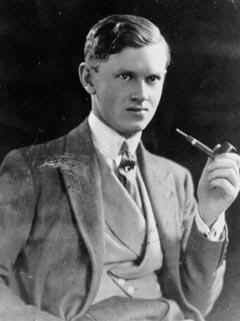
Evelyn Waugh and family, circa 1949 AD
Parts of this family look happy


Philip Trower, English author and convert, has written an essay about his conversion in which he suggests that all converts become Catholic for the same reason:

"…they come to realise that the Church is what it claims to be: the sole authorised guardian and disseminator of the one true revelation of God to men through which they can know with certainty the purpose of their existence and their final destiny.”

The English poet Sally Read says something very similar:

“I realized that there was only one Church and the way to be closest to Christ was to be a Catholic, because it’s the Eucharist and taking Communion.”

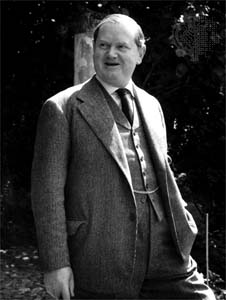
Evelyn Waugh, a far more famous English author and convert, substantially concurs.  Waugh, who converted in 1930, once explained that he had concluded by the age of 16 that “Catholicism was Christianity,” but then ignored religion for the next decade.   Finding that life was “unintelligible and unendurable without God,” Waugh converted.   For Waugh, his faith was not merely a source of comfort; it was, in his view,  “the essence.”

There have been many converts and we can never know all of their reasons for converting, but, at least amongst English writers, the reasons do appear remarkably alike.

Tuesday, May 15, 2012

"The cranks in authority"


The lights appear to be going back on all over the world.  
This Low Mass was celebrated at the seminary of the NY Archdiocese

From a letter of  Evelyn Waugh to the Editor of The Tablet, August 14, 1965:

"We have had the "liturgical movement" with us in parts of the USA and northern Europe for a generation.  We looked on them as harmless cranks who were attempting to devise a charade of second-century habits.  We had confidence in the abiding Romanita of our Church.  Suddenly we find the cranks in authority.

In the sixteenth century the demand for Communion in both kinds (itself inoffensive) became a characteristic of heresy.  In rather the same way today the appetite for small interpolations and abridgements, for raising the voice instead of the mind and heart, the disordering of services of great beauty and meaning which have developed throughout the centuries (e.g. the ritual of Good Friday) may prove to be symptoms of grave ill."

We have, these last several decades, suffered the grave ill of which Waugh noted the symptoms.  Although our sufferings are far from being at an end, there are signs that perhaps the tide has begun to turn back toward tradition.

Elizabethan martyrs, pray for us.

Friday, May 4, 2012

"Healthy irreverence" ?

Unsuitable dress for the "priest-president"


From a letter of Evelyn Waugh to the Editor of the Tablet, August 21, 1965, regarding an article in Commonweal concerning liturgists:

"The author is Fr John J. Ryan of the diocese of Peoria now, we are told, employed in writing "catechetical materials" in Chicago.

He begins by quoting a friendly priest who, with what he describes as "healthy irreverence", remarked: "Now that we have the liturgy in English, the people will really see how absurd it is."

The liturgy, he says, "fixed in all essentials" for the "tribal men" of late Roman society, says "next to nothing" about the "insights" of contemporary man.  The Gloria is a "curious thing".  The Canon an "obscure and puzzling list of Roman worthies."

".... Fr Ryan wishes to change the words "low obedience, duty, virtue" (I presume he is here referring to his catechism) for "encounter, commitment and involvement."

"He nowhere suggest the unique sanctity of the priestly office . . . The priest must not emerge "like a God in an ancient pageant".  Vestments are out and, also, it seems, any distinguishing costume.  Instead he wishes to have a "priest-president" who will conduct a "sort of town meeting" to discuss social projects."

Incidentally, Fr. John J. Ryan died in 2000.  According to his obituary in the Chicago Tribune, "Mr. Ryan was not active as a priest when he died and preferred to be called professor, his sister said."

Elizabethan martyrs, pray for us. 


Friday, April 27, 2012

"Do not despair"

Archbishop Heenan
Underestimated scope of liturgical changes and proved a poor guide to what the bishops wanted


From a letter to Evelyn Waugh from Archbishop Heenan, August 20, 1964:

"I think that the leaders of the new thought (if that is not too strong a word) are not so much the young pops as the Catholic "intellectuals".

"....They regard us as mitred peasants and look for guidance to the continental clergy."

"....The hierarchy is in a difficult position. . . . Most of us would be content to delay changes but the mood of the Council compels us to act."

"But do not despair.  The changes are not so great as they are made to appear. . . . I shall be surprised if all of the bishops will want all Masses every day to be in the new rite."

Elizabethan martyrs, pray for us.

Friday, April 20, 2012

'"Participate" - the cant word'

 It's not for everyone


Taken from Evelyn Waugh diary entry, Easter 1964:

'"Participate" - the cant word - does not mean to make a row as the Germans suppose.  One participates in a work of art when one studies it with reverence and understanding."

Elizabethan martyrs, pray for us.

Wednesday, April 18, 2012

". . . a great cheek of the Germans"

 Fr. Charles Davis
(He eventually left the Church and married in an Anglican ceremony)

From a letter of Evelyn Waugh to Lady Daphne Acton, commenting on Liturgy and Doctrine, by Fr. Charles Davis, and liturgical changes generally:

"Some people, like Penelope Betjeman, like making a row in church and I don't see why they shouldn't; just as the Abyssinians dance and wave rattles.  I should feel jolly shy dancing and I feel shy praying out loud.  Every parish might have one rowdy mass a Sunday for those who like it.  But there should be silent ones for those who like quiet.

. . . . I think it a great cheek of the Germans to try and teach the rest of the world anything about religion.  They should be in perpetual sackcloth and ashes for all their enormities from Luther to Hitler. 

The worst mistake of your Fr Davis is his almost blasphemous degadation of the conception of the mystical Body into a parish meeting. You and I and the dancing Abyssinians and the saints in glory are, as you well know, integral parts of the Mystical Body.  We don't have to be shouting one another down in the next pew."

Elizabethan martyrs, pray for us.

Monday, April 16, 2012

"What a pity the voice of the laity was not heard sooner"

Archbishop (by this time Cardinal) Heenan

That bootless lament comes from Archbishop Heenan of Liverpool, and the subject upon which His Excellency bewails the voice of the laity going unheard is the revision to the liturgy precipitated by Vatican 2.   It appears in a 1962 letter from Archbishop Heenan to Evelyn Waugh, commending Waugh's critique of the liturgical changes contained in "The Same Again, Please," which we blogged about here.

In the same letter, Archbishop Heenan goes on to observe:


"The real difficulty (I think) is that Continentals are twisting themselves inside out to make us look as like as possible to the Protestants.  How I wish we could persuade them (a large majority I fear) that to be at home  with our Mass and ceremonies is far more important than being right according to the books of liturgical antiquities."

Alas, the effort to persuade the Continentals (if it was even made) failed utterly.


Friday, April 13, 2012

"The same again, please" (conclusion)

Evelyn Waugh


The following excerpt from an article published in the November, 1962 Spectator by Evelyn Waugh is taken from "A Bitter Trial," which mainly concerns the correspondence between Waugh and Cardinal Heenan on the post- Vatican 2 changes to the liturgy:

"Awe is the natural predisposition to prayer.  When young theologians talk, as they do, of Holy Communion as a "social meal" they find little response in the hearts and minds of their less sophisticated brothers.

No doubt there are certain clerical minds to whom the behaviour of the laity at Mass seems shockingly unregimented. . . . There is no apparent "togetherness".  Only in heaven are we recognisable as the united body we are.  It is easy to see why some clergy would like us to show more consciousness of one another, more evidence of taking part in a social "group activity".  Ideally they are right but that is to presuppose a very much deeper spiritual life in private than most of us have achieved."


Elizabethan martyrs, pray for us.

Wednesday, April 11, 2012

"The Same Again, Please" (part 2)

Saintly priest celebrating Mass
 
The following excerpt from an article published in the November, 1962 Spectator by Evelyn Waugh is taken from "A Bitter Trial," which mainly concerns the correspondence between Waugh and Cardinal Heenan on the post- Vatican 2 changes to the liturgy:

"There is a party among the hierarchy who wish to make superficial but startling changes in the Mass in order to make it more widely intelligible.  The nature of the Mass is so profoundly mysterious that the most acute and holy men are continually discovering further nuances of significance.  It is not a peculiarity of the Roman Church that much which happens at the altar is in varying degrees obscure to most of the worshippers.  It is in fact the mark of all the historic, apostolic Churches.  In some the liturgy is in a dead language such as Ge'ez or Syriac; in others in Byzantine Greek or Slavonic which differs greatly from the current speech of the people."

Friday, December 16, 2011

Chant is nice, too

 Flemish High Mass, 15th century

Francis Phillips tells us that Evelyn Waugh preferred the humble Low Mass to the splendor of the High Mass.  This may startle some, though I would be very surprised if Waugh's preference represented to any degree a disparagement of High Mass.   After all, as Waugh surely understood, High Mass is not simply the fancy Mass, while Low Mass is the plain variety.  The distinction between the two is that at High Mass the priest chants his parts, whereas at Low Mass the priest does not.  The tradition of chant in public worship is older than the Mass itself; in chanting the psalms and other prayers the Church carried on and developed the traditional Jewish mode of praying the psalms.  For an interesting perspective on chant, see this interview with Mother Miriam of the Lamb of God, OSB, formerly Rosalind Moss, a convert to the Faith from Judaism.

St. Thomas Aquinas, pray for us.

Friday, October 21, 2011

Evelyn Waugh on the post-conciliar liturgy

                                                              Evelyn Waugh

As you may imagine, Waugh did not care for the Novus Ordo, and greatly lamented its break with tradition.  Waugh also declared the changes to Mass (mincing words for once)  "a bitter trial."   The Ignatius Press has published Waugh's correspondence on the subject with Cardinal Heenan, who largely shared Waugh's view.  More here.

I am a great admirer of Waugh's fiction, and look forward to reading Waugh in prophetic mode.